
Barak Blum
Associate Professor of Cell and Regenerative Biology
Organogenesis and functional maturation of the islets of Langerhans in the pancreas
4551 WIMR II, 1111 Highland Ave
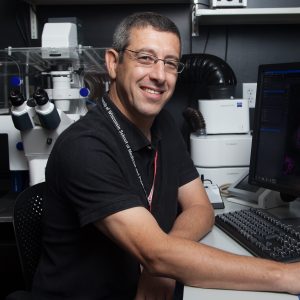
- B.Sc., Life Sciences, Ben-Gurion University of the Negev, Israel
- M.Sc., Medical Biochemistry, The Hebrew University of Jerusalem, Israel
- Ph.D., Genetics, The Hebrew University of Jerusalem
- Postdoctoral Research, Stem Cell and Regenerative Biology, Harvard University
-
bioRxiv : the preprint server for biology.
-
bioRxiv : the preprint server for biology.
-
Scientific reports.
-
Developmental biology.
-
FASEB journal : official publication of the Federation of American Societies for Experimental Biology.
-
Frontiers in endocrinology.
-
Islets.
-
Diabetes.
-
eLife.
-
Cell reports.
-
Molecular and cellular biology.
-
Scientific reports.
-
Developmental cell.
-
Proceedings of the National Academy of Sciences of the United States of America.
-
eLife.
How does a newly formed stem or progenitor cell “know” it had reached its full differentiation capacity, and should assume its mature function? What part of the signal towards terminal differentiation comes from the cell’s interactions with its surrounding environment, and what is encoded in the blueprint of its intrinsic developmental program? How is this functionally mature state, once achieved, sustained throughout adult life, or tip off balance and erode in degenerative disease? And what exactly is a fully differentiated, functionally mature cell state? Not only do these questions represent fundamental problems in developmental biology, but they are also crucial in regenerative medicine, where one wants to impose a functionally mature phenotype upon stem cells differentiated in vitro, or prevent the loss of the mature cell state in degenerative diseases.
Our lab uses human pluripotent stem cells differentiation, developmental biology of the pancreas, mouse genetics, bioinformatics and functional genomic analyses to discover the genetic and molecular regulatory circuits controlling the development, maintenance, collapse and recovery of the fully differentiated, functionally mature β cell state in mice and humans.
Expanding our knowledge of functional β cell maturation will have an important impact on both stem cell based therapy for type-1 diabetes and on the prevention of irreversible β cell de-differentiation in type-2 diabetes. Specifically, it may lead to the ability to genetically set naive β cells differentiated from stem cells in vitro to produce and secrete exactly the right amount of insulin in response to a given concentration of glucose, as well as to prevent de-differentiation and maintain functional β cell maturation in diabetics.
Wisconsin Alumni Research Foundation Fall Competition Award
EMBO Long-Term Post-Doctoral Fellowship
JDRF Post-Doctoral Fellowship